
About Compare Boilers
Compare-Boilers.co.uk is a UK quote-matching service for boilers, radiators and hot water. You send one enquiry about your property and the problem, and independent heating engineers who cover the area can contact you with a price.
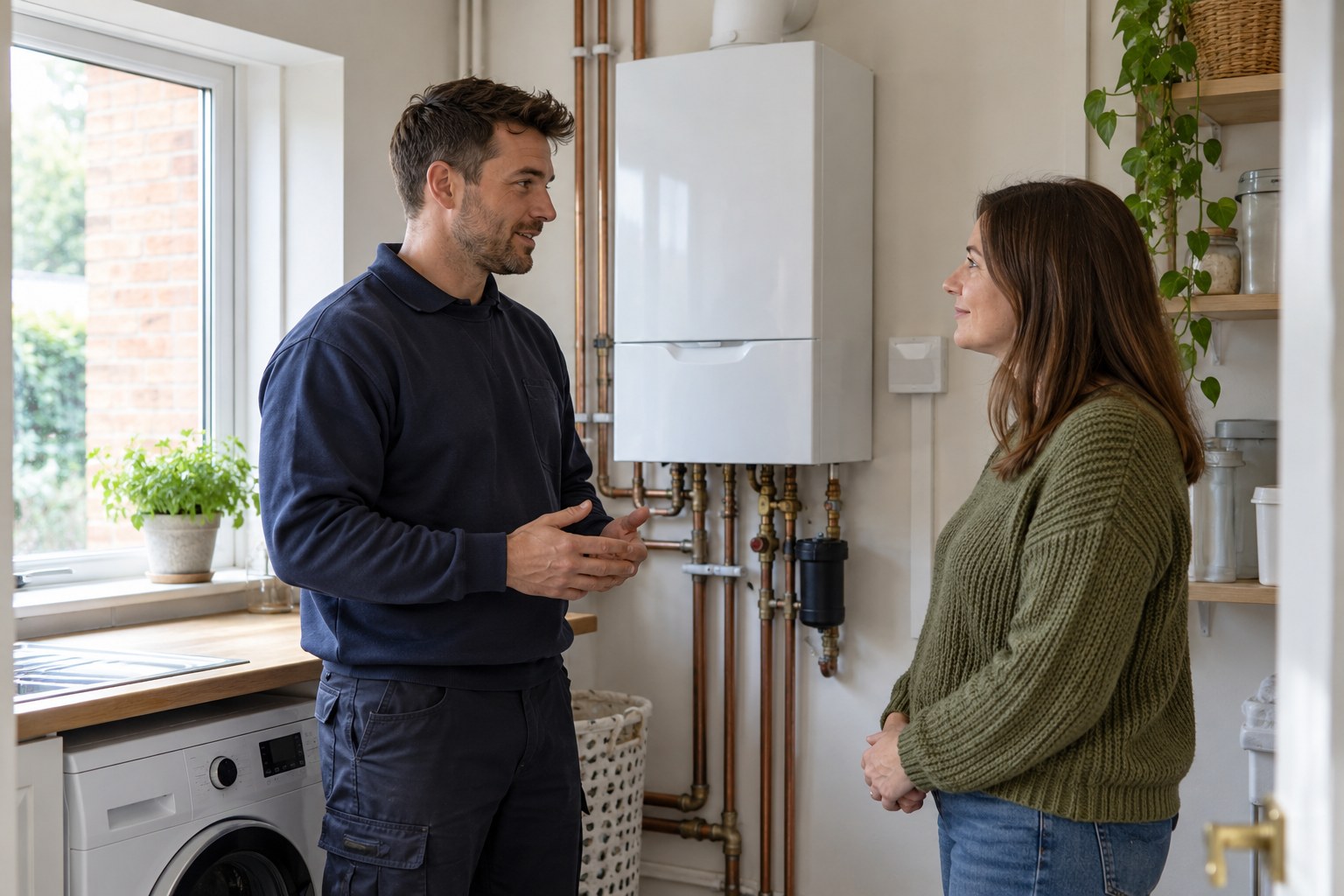
The jobs range from a stuck thermostatic valve in a back bedroom to a full combi conversion that takes out a cylinder and loft tanks. Our pages explain what each job involves, what drives the cost and what to ask, so the quotes you get back are easier to compare.
What happens to your enquiry
Your request can be matched with up to four heating businesses based on the work and the postcode. An engineer may ask for a photo of the boiler data badge, check the job over the phone or arrange a survey. A new combi almost always needs a survey; a TRV head swap may not.
Four quotes are not guaranteed. Replies depend on local coverage, the type of work and who is available. The enquiry is free and you can turn down every quote. Ask about any call-out or diagnostic fee before agreeing to a visit.
The heating work covered
Combi Boiler Replacement
New combis fitted in place of old combi, system or regular boilers. Output, flue position, gas pipe size and mains flow all shape the price.
Boiler Hot Water Repair
Boilers that heat the radiators but leave the taps cold. Diverter valves, flow sensors, scaled heat exchangers and cylinder zone valves are the usual causes.
Leaking Radiator Repair
Drips from valve spindles, unions, bleed screws and pipe joints, and corroded radiators with pinhole leaks that need replacing.
Radiator Valve Replacement
Seized, spinning or leaking wheelhead and lockshield valves changed, with the system drained or the pipes frozen, then refilled and balanced.
Thermostatic Radiator Valves
TRVs fitted where there are none, stuck TRVs replaced and smart TRV heads added, with the boiler bypass checked.
Immersion Heater Replacement
Burnt-out elements and faulty thermostats replaced in vented and unvented cylinders. The replacement must match the cylinder manufacturer’s specification, including its safety cut-out.
What we ask of engineers
We ask engineers who join for their insurance details and references. That does not guarantee the work. Check their current insurance, experience and qualifications yourself.
For gas boilers, that means registration on the Gas Safe Register with the relevant boiler and fuel categories on the engineer’s card. For immersion heaters, it means electrical competence, and unvented cylinder training if your cylinder is pressurised. An engineer who changes radiator valves every week may not fit boilers, so ask who will do each part of the job.
Your contract is with the engineer
We do not send our own staff to do heating work. Each business gives its own diagnosis, quote and terms, and you decide whether to hire it. The booking, contract, payment and any follow-up are between you and that business.
Keep the written quote with the invoice and any certificates. For a new boiler, keep the Benchmark checklist and warranty registration, plus the Building Regulations compliance certificate in England and Wales or the relevant completion documents elsewhere in the UK. If something goes wrong later, Citizens Advice consumer guidance explains your rights when a trader’s work is not up to standard.
Homeowners, landlords and tenants
Include the postcode and the name of whoever can sign off the work. Tenants should go through their landlord or letting agent for heating repairs. Landlords should remember that a gas boiler needs an annual gas safety check, separate from any repair.
Tell the engineer if you have no heating or hot water, or if someone in the home is vulnerable to the cold. That helps engineers plan, though sending an enquiry does not book a slot or mean anyone will come urgently.
The service behind the website
Compare-Boilers.co.uk is run by Local-Quotes.co.uk, and enquiries are handled through Leads Do Work. Heating businesses that want enquiries can sign up at leads.work, or read more on our heating job leads page.
Ready to compare quotes?
Use the enquiry form to say what is happening and where. You do not need to know the part name; describing what you see is enough to start.