
What is leaking radiator repair?
Leaking radiator repair means finding where water is escaping from a radiator or its connections and stopping it. Most leaks come from the valves at each end, the nut joining the valve to the radiator, or the bleed screw at the top. A smaller share come from the radiator itself, where internal corrosion has eaten a pinhole through the steel.
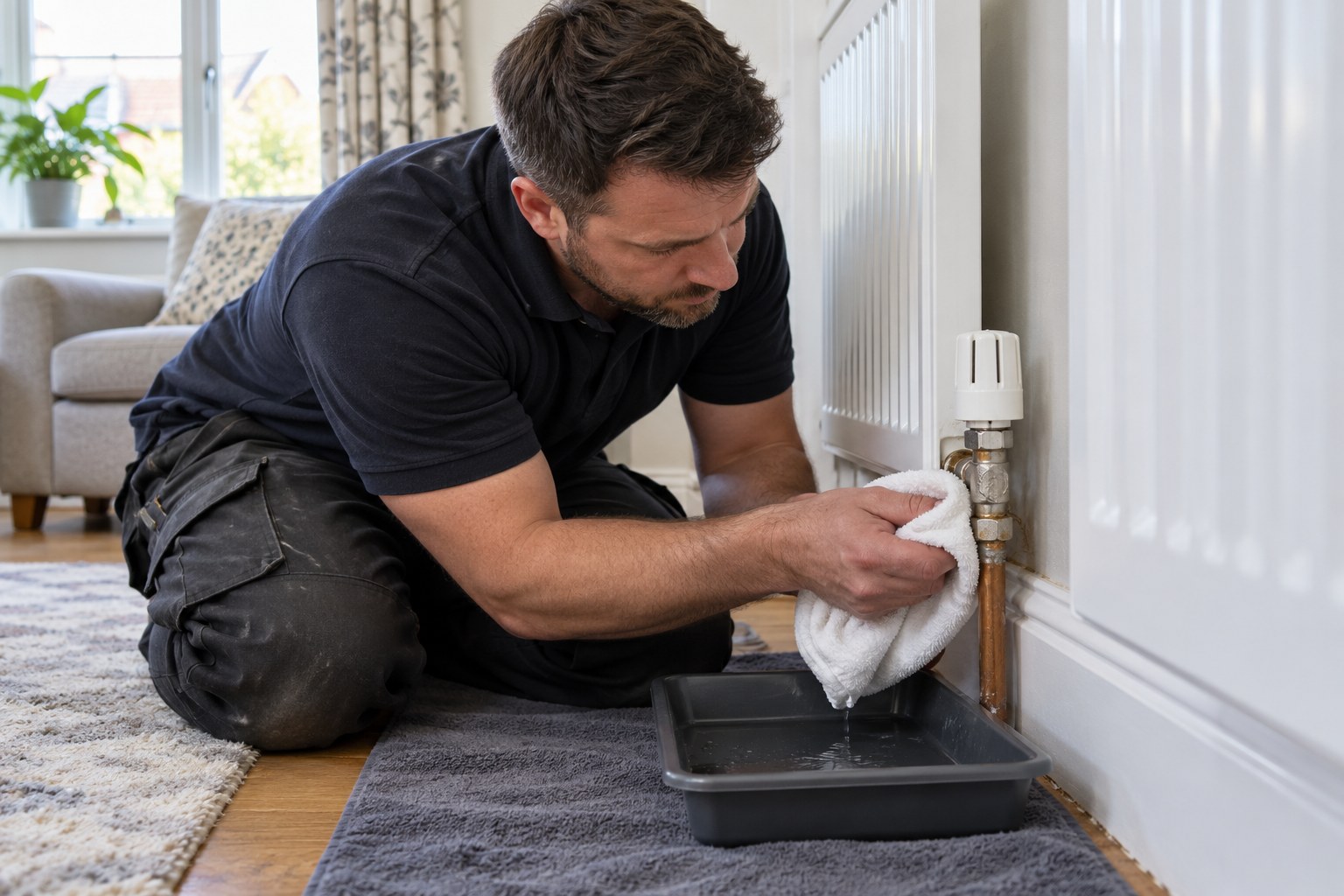
A slow drip can damage the floor. It stains carpets and lifts laminate. On a sealed system it also lets the pressure fall until the boiler locks out, and every top-up brings in fresh oxygen that speeds up corrosion inside the rest of the system.
Signs you need leaking radiator repair
- A wet patch, stain or brown tide mark on the floor under one end of a radiator
- Water beading on a valve spindle or the nut where the valve meets the radiator
- Crusty green or white deposits on brass valves or joints
- Rust spots or a damp bloom on the face or seams of the radiator panel
- Boiler pressure that drops a little every few days and has to be topped up
- A hiss or drip from the bleed screw after bleeding
Leak repair options explained
- Valve spindle leaks. Water seeps from under the cap or head. Tightening the gland nut or repacking it often stops it, and no draining is needed.
- Valve tail or union leaks. The joint between the valve and the radiator weeps. The radiator is isolated, the union undone and the tail resealed or replaced.
- Pipe joint leaks. Compression or soldered joints on the pipe below the valve can fail. Access may mean lifting a floorboard.
- Bleed screw leaks. A worn screw or valve is swapped for a new one, sometimes with the radiator isolated.
- Corroded radiator. A pinhole in the panel means the steel is thinning from inside. Sealants may slow it down, but replacing the radiator is the lasting fix. A like-for-like size can often use the same valves.
What to include when asking for a quote
If the radiator has cooled and it is safe to reach, note where the water appears. You can dry accessible pipework with a towel and see where the drip returns without loosening anything. Tell the engineer which end it is, whether the leak is on the valve, the joint or the panel, and roughly how fast it drips.
Give the radiator size and type if you are asking about a replacement: height, width and whether it is single or double panel. Mention whether the pipes come up through the floor or out of the wall, and whether the floor is solid, boarded or tiled. A leak under laminate with no access is priced differently from an exposed joint.
Say whether the boiler pressure has been falling and how often you top it up. That tells the engineer whether to look for a second leak somewhere else on the system.
How much does leaking radiator repair cost?
| Type of job | Typical cost |
|---|---|
| Valve gland tightened or repacked, or bleed screw replaced | £90–£140 |
| Valve tail or union resealed, with the radiator isolated | £140–£220 |
| Corroded radiator replaced like for like | £220–£350+ |
These are indicative UK budgeting figures, not fixed quotes. Confirm parts, labour, VAT and any call-out charge with the business before booking.
The top row covers a short visit with standard parts. Larger designer or column radiators, a leak under the floor or a system that needs a full drain-down and inhibitor refill can cost more. Ask whether repressurising and refilling the inhibitor are included.
The repair process: what to expect
- Find the leak. The engineer dries the area and traces the exact point the water escapes from.
- Isolate the radiator. Both valves are closed so the radiator can be worked on, or the system is partly drained if the valves will not shut.
- Repair or replace. The gland is repacked, the joint remade, the bleed screw changed or the radiator swapped for a new one.
- Refill and bleed. The radiator is reopened and bled, and the system topped up to the right pressure with inhibitor added if water was lost.
- Check. The engineer runs the heating and checks the repair stays dry once hot.
Planning permission and building regulations
Repairing a leak or replacing a radiator like for like needs no planning permission and is not notifiable under Building Regulations. If you live in a flat, check your lease or ask the managing agent before work that involves lifting floors over shared pipework. Tenants should report the leak to the landlord, who is usually responsible for heating repairs.
How to choose a radiator repair engineer
- Will they find the source before quoting for a new radiator?
- Is the price fixed for the repair, or charged by the hour?
- Will they top up inhibitor and repressurise the system afterwards?
- If the radiator is replaced, will they match the heat output, not just the size?
- Do they guarantee the joint or valve they have worked on?
Frequently asked questions
Can a pinhole leak in a radiator be patched?
Only for a short time. A pinhole means the steel is corroding from inside, and other weak spots are likely nearby. Leak sealer or a patch may buy a few weeks, but a new radiator is the lasting repair.
Will a leaking radiator affect my boiler?
On a sealed system, yes. As water escapes the pressure falls, and most boilers lock out when it drops too low. Topping up again and again also adds fresh oxygen, which speeds up corrosion elsewhere in the system.
Does the whole heating system need draining?
Not always. If both valves on the radiator shut off properly, the radiator can be isolated and repaired on its own. If a valve will not close or the leak is on the pipe below it, the system may need partly draining.
Why do radiators corrode and leak?
Corrosion starts when oxygen gets into the water, often from frequent top-ups, a small leak or too little inhibitor. It forms sludge and thins the steel. Checking the inhibitor level at each boiler service helps slow it down.