
What is combi boiler replacement?
Combi boiler replacement swaps the gas boiler you have now for a new combination boiler. A combi heats the radiators and gives hot water straight from the mains without a cylinder or loft tank. Most jobs swap an old combi for a new one in the same spot. Others convert a system or regular boiler to a combi, which removes the hot water cylinder and usually the tanks in the loft as well.
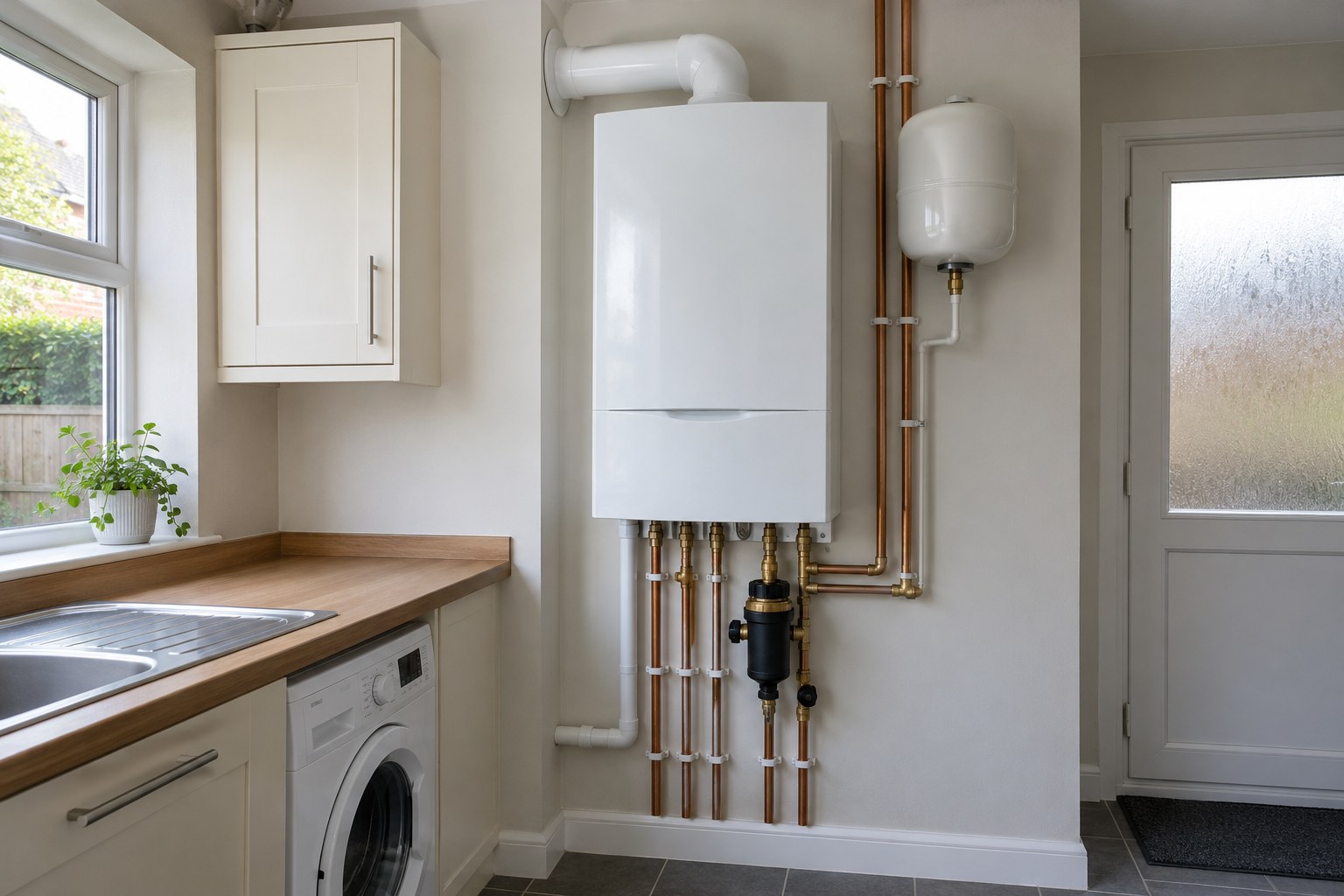
People tend to look into a replacement when repair bills start stacking up, when the old boiler has been condemned or when parts for an older model are hard to find. Comparing like for like matters more here than on any other heating job, because two prices for “a new combi” can describe quite different installations.
Signs you need combi boiler replacement
- The boiler is past 12–15 years old and has needed more than one repair in the last couple of winters
- Your engineer has struggled to source parts, or says the model is no longer supported
- Hot water takes a long time to run warm, or swings between hot and cold when a second tap opens
- The pressure gauge keeps falling, or the boiler locks out with the same fault code again and again
- The flame picture or flue has been marked “at risk” or “immediately dangerous” after a safety check
- You want to remove a cylinder and loft tanks to free up space, and the mains supply is strong enough for a combi
Combi boiler options explained
Start with the boiler size and the type of installation.
- Like-for-like combi swap. The new combi goes on the same wall, reuses the gas, water and condensate connections where they are sound and fits a new flue through the existing hole if the clearances still work. This is the quickest and usually the cheapest route.
- Combi swap with upgrades. The same swap plus a larger gas pipe back to the meter, a new flue route, a re-run condensate pipe or new controls. Older installations often need one or more of these to meet current rules.
- Conversion to a combi. A system or regular boiler and its cylinder come out, the pipework is altered and the loft tanks are capped or removed. It takes longer and costs more, and it only suits homes where the incoming mains can supply enough flow.
Boiler specifications list heating and hot water outputs in kW, and they may differ. The installer should assess heat loss, hot water demand, mains flow and pressure rather than choose a boiler by bedroom count alone. A powerful boiler cannot supply more water than the incoming main delivers.
What to include when asking for a quote
Start with what is on the wall now: the make and model from the data badge, whether there is a cylinder, and where the boiler sits (kitchen cupboard, loft, garage). Say how many radiators and bathrooms the house has, and whether two showers are ever used at once. A rough idea of your water flow helps too: time how long the kitchen cold tap takes to fill a 10-litre bucket.
Ask each engineer to name the boiler model and its output, and to list the extras: filter, chemical or power flush, new controls, flue kit, gas pipe upgrade and condensate work. Without those listed, a cheap quote may simply be missing the parts a dearer one included.
Check the warranty term and what keeps it valid. Most manufacturers ask for registration soon after fitting and an annual service. A ten-year warranty on a boiler that needs an approved installer is a different offer from a five-year one anyone can register.
How much does combi boiler replacement cost?
| Type of job | Typical cost |
|---|---|
| Like-for-like combi swap on the same wall | £2,500–£4,000 |
| Combi swap with new flue, gas pipe or controls | £2,800–£4,000+ |
| System or regular boiler converted to a combi | £3,400–£4,500+ |
These are indicative UK budgeting figures, not fixed quotes. Confirm parts, labour, VAT and any call-out charge with the business before booking.
The overall service guide is £2,000–£4,000. These examples allow for a boiler, labour and standard parts; a conversion can exceed that guide. Premium brands, long warranties, moving the boiler to another room and loft installations can take the price past the top of the range. Ask whether VAT is included and whether old boiler and cylinder removal is priced in.
The combi boiler replacement process: what to expect
- Survey. Before quoting a fixed price, the installer looks at the gas meter and pipe size, the flue position, the condensate route and the mains flow and pressure, then confirms which boiler size suits the house.
- Drain-down and removal. The heating system is drained, the old boiler and any cylinder or tanks no longer needed come out, and the wall is prepared.
- System clean. The pipework and radiators are cleaned with a chemical flush or a power flush so old sludge does not go straight into the new heat exchanger.
- Installation. The new combi, flue, filter and controls are fitted, and the gas, water and condensate pipes are connected up.
- Commissioning and paperwork. The engineer tests the gas supply and combustion, fills and bleeds the system with inhibitor, completes the Benchmark checklist and shows you the controls.
A straight swap is usually done in a day. A conversion often runs to a second day, with heating and hot water off for some of that time.
Planning permission and building regulations
Planning permission is rarely needed for a replacement boiler. Listed buildings, and flues facing the road in some conservation areas, can be exceptions, so check with your council first if that applies.
Building Regulations do apply. Fitting a gas boiler is notifiable work in England and Wales, and a Gas Safe registered installer normally handles it through the Gas Safe scheme, after which a Building Regulations compliance certificate is sent to the householder. In England, Approved Document L sets the efficiency and controls expected when a boiler is replaced. Ask your installer which controls they will fit to meet it. Rules in Scotland and Northern Ireland differ.
How to choose a combi boiler installer
- Is the engineer on the Gas Safe Register, and does their card list domestic gas boilers?
- Which boiler model and kW output are you quoting, and why does that size suit this house?
- Is a magnetic filter included, and is the flush chemical or a full power flush?
- Who registers the warranty, and how long is it with your installation?
- Will you fit new controls, and do they meet current Building Regulations?
- What happens to the old boiler, cylinder and tanks, and is disposal in the price?
Frequently asked questions
Is a higher kW combi always better?
No. A bigger output only gives more hot water if the mains supply can deliver the flow to match. An oversized combi costs more to buy and can cycle on and off with the heating. The engineer should check your mains flow before choosing the size.
Why do quotes for the same boiler vary so much?
The boiler is only part of the price. Quotes differ on the flue, a larger gas pipe, the filter, the type of flush, new controls, disposal and how long the warranty runs. Ask each installer to list these so you can compare the same job.
Can the new combi go where the old boiler is?
Often it can, as long as the flue still meets the clearances from windows, doors and boundaries and the condensate pipe has a suitable route. Moving the boiler to another room adds pipework and cost.
What paperwork should I get after a new combi is fitted?
Keep the completed Benchmark commissioning checklist and warranty registration with the boiler manual. In England and Wales, also obtain the Building Regulations compliance certificate. Ask the installer which completion documents apply elsewhere in the UK.